
Audiometric Testing
OSHA-Compliant Hearing Tests. No Booth. No Van.
Complete OSHA-compliant testing in about 6 minutes, at your facility, on your schedule. The Invisible Booth™ monitors ambient noise continuously, ensuring valid results without a sound booth.
~6 min
avg. test time
100%
OSHA compliant
Independent 1910.95 Audit
Third-Party Reviewed
FDA Registered
Class II Medical Device
SOC 2 Type II
AICPA Certified
HIPAA Compliant
Powered by Vanta

Made in USA
Engineered & Built
Test in Minutes. Review in Hours.
Records That Build Themselves.
Run an OSHA-compliant audiometric test in about 6 minutes - anywhere, no booth needed. Results sync instantly to each employee's profile, STS flags are detected automatically, and a licensed audiologist completes review within 24 hours.
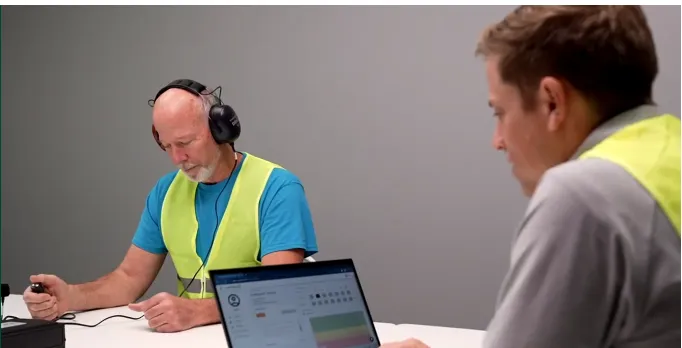
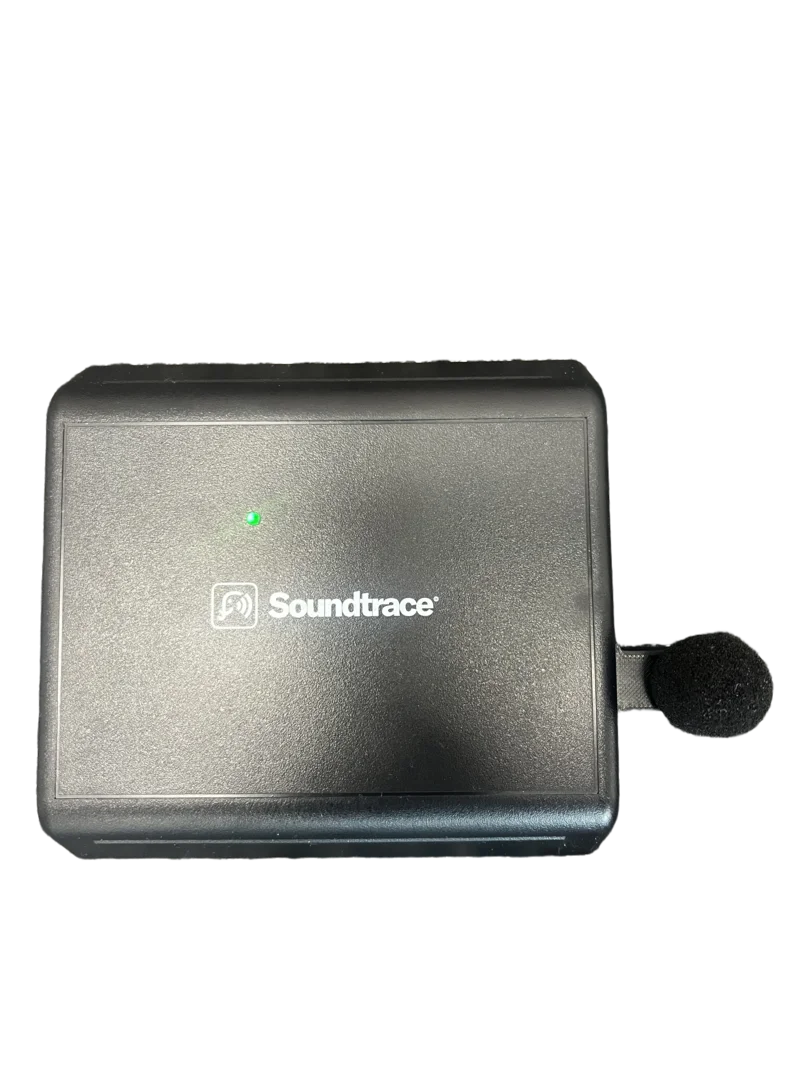
Soundtrace Audiometer
Connected diagnostic audiometer with built-in ambient noise monitoring
Boothless Testing
The Invisible Booth™ continuously monitors ambient noise and adjusts testing protocols in real time. No sound booth required - test anywhere that meets ambient conditions.
Audiologist Review
Every audiogram is reviewed by a licensed audiologist within 24 hours. STS flags, referral recommendations, and follow-up actions are documented automatically in each employee's record.
Connected & Automatic
Results sync via LTE, Bluetooth, or USB the moment a test is complete. Employee records build themselves - no data entry, no paper, no filing. 30-year digital retention included.
Why It Matters
Hearing Loss Is Permanent. Testing Is Prevention.
Noise-induced hearing loss is 100% preventable but 100% irreversible. Beyond the human cost, undetected hearing loss drives workers' comp claims averaging $45K+, increases insurance premiums, impacts EMR scores, and creates long-term civil liability exposure. Audiometric testing is the early warning system that catches threshold shifts before they become permanent, recordable injuries.
0M
US workers exposed to hazardous noise annually
Source: CDC/NIOSH
0%
of the US workforce has hearing difficulty
Source: BLS
0%
of occupational hearing loss cases had no audiometric testing
Source: OSHA
The Cost of Not Testing
Annual audiometric testing catches threshold shifts early - when intervention can prevent further damage, before hearing loss becomes a recordable OSHA injury and a workers' compensation claim. A single occupational hearing loss workers' comp claim averages $30,000–$75,000. A well-documented audiometric testing program is your strongest legal defense.
Schedule Flexibility
Test on Your Schedule, Not a Van's
See how testing cadence impacts completion rates, compliance gaps, and operational disruption.
Choose a Testing Cadence
Compare how scheduling frequency affects your program outcomes
Annual (Mobile Van)
1–2 day van visit per year
Traditional approach: coordinate schedules months in advance, pull everyone off the floor on van day, pay premium rates for anyone who was absent.
117
Employees tested
33
Missed / non-compliant
78%
Completion rate
4.5 months
Avg wait for new hires
Missed Employee Catch-Up
Reschedule van or wait until next year
Compliance Risk Level
High - single point of failure
Hearing Change Detection Delay
Up to 12 months - A full year of potential hearing damage before the next test detects it.
With 33 employees missing their annual test, each one is a potential OSHA citation at up to $15,625 per violation. That's up to $515,625 in potential fines - plus the workers' comp exposure from undocumented hearing changes.
The Invisible Booth™
How Boothless Testing Actually Works
OSHA doesn't require a sound booth - they require that ambient noise doesn't interfere with testing. The Invisible Booth™ monitors and documents environmental conditions in real-time, providing continuous compliance verification that a booth alone cannot.
Continuous Monitoring
Calibrated microphone measures ambient noise throughout the entire test
ANSI S3.1 Validated
Room noise compared against maximum permissible levels in real-time
Automatic Pause & Resume
Test pauses instantly when noise exceeds safe limits, resumes when clear
Documented & Stored
Ambient noise conditions permanently recorded with every audiogram
Independent Compliance Audit - Scott Ketcham
Scott Ketcham, one of the nation's leading occupational audiologists, conducted an independent audit of Soundtrace's testing methodology. His review validated that the Invisible Booth™ approach meets both OSHA 29 CFR 1910.95 and ANSI S3.1 standards - providing third-party credibility that goes beyond any manufacturer's self-certification.
The Testing Process
A 6-Minute Test. A Complete Clinical Workflow.
Every audiometric test flows through a clinically supervised workflow - with Soundtrace acting as your professional supervisor at every step.
Pre-Test Questionnaire
~1 min
Digital health history, noise exposure, and medications - captured before the test begins.
Digital health questionnaire captures noise exposure history, recent loud noise events, medical conditions, and any ototoxic medications. Responses are stored with the audiogram for clinical context.Automated Hearing Test
~4 min
All standard frequencies tested with calibrated headphones. Room noise monitored continuously.
The system tests hearing at all standard frequencies using calibrated audiometric headphones with automated threshold detection. Room noise is monitored continuously throughout to ensure accurate results.Hearing Change Detection
Instant
Results compared against baseline the moment the test completes. Shifts flagged automatically.
The moment the test completes, the system compares results against the employee's baseline. Meaningful shifts are flagged automatically with and without age adjustments. No waiting for someone to review paper records manually.Acknowledge & E-Sign
~1 min
Employee reviews results, signs digitally, and walks away. Records stored 30+ years.
Results are immediately available. The employee reviews their audiogram, acknowledges receipt, and e-signs - all before leaving the testing station. Every test, room noise level, and calibration record is stored digitally with 30+ year retention.Audiologist Review
Within 24 hrsEvery audiogram routed to a licensed audiologist. Shifts prioritized, findings annotated, follow-up recommended - all within 24 hours.
Behind the scenes, Soundtrace - acting as the professional supervisor for your hearing conservation program - routes every audiogram to a licensed audiologist for asynchronous review. Concerning results like hearing shifts, unusual patterns, or significant changes are prioritized. The audiologist annotates findings, confirms or revises STS determinations, and recommends follow-up - all within 24 hours, without disrupting the employee's workday.HPD Fit Testing
~2 minMeasure actual earplug protection per employee - the best way to train proper insertion.
For the most complete hearing conservation workflow, add quantitative HPD fit testing. Measure the actual protection each employee gets from their hearing protection device - the most effective way to train proper earplug insertion and verify real-world attenuation. Can be performed right after the audiometric test while the employee is already at the testing station.Key Advantages
Testing That Works Around Your Operations
Not the other way around. Test any employee, any shift, any day - with full OSHA compliance and automatic documentation.
6-Minute In-House Testing
Complete OSHA-compliant audiometric testing in about 6 minutes per employee, right at your facility. No off-site travel. No mobile van scheduling. No pulling workers from the floor for hours. Test during onboarding, any shift, any day - whenever it fits your operations.
OSHA-Compliant Without a Sound Booth
The Invisible Booth™ uses a built-in calibrated microphone to monitor room noise in real-time throughout every test. If the room gets too loud, the test auto-pauses. Room noise levels are stored with every hearing test - providing the same documentation a traditional sound booth would.
Catch Hearing Changes Before They're Permanent
The system automatically flags meaningful hearing shifts by comparing each annual test against the employee's baseline. Age-related adjustments are applied automatically. Changes are caught immediately - not weeks later when someone reviews paper records. Early detection means early intervention, before hearing loss becomes permanent and recordable.
Backed by Real Audiologists - and Independently Verified
Every hearing test is reviewed by a licensed audiologist within the platform. An independent audit by Scott Ketcham, one of the nation's leading occupational audiologists, validated that Soundtrace's testing methodology meets OSHA and ANSI standards. Dr. Subinoy Das, Soundtrace's Chief Medical Officer, oversees clinical protocols and ensures testing quality across the nationwide audiologist network.
Side-by-Side Comparison
How Soundtrace Compares
See why companies are switching from traditional audiometric testing methods to always-available in-house testing.
Scheduling flexibility
Soundtrace
Any day, any shift, during onboarding
Mobile Vans
1–2 available dates per year, months in advance
Setup time
Soundtrace
Always ready - no setup needed
Mobile Vans
Van setup and teardown each visit
Test duration
Soundtrace
~6 minutes per employee
Mobile Vans
15–30 minutes (including wait time)
Sound booth required
Soundtrace
No - Invisible Booth™ ambient monitoring
Mobile Vans
Yes - portable booth in the van
Results available
Soundtrace
Immediately, with automatic hearing change detection
Mobile Vans
Days to weeks for report delivery
Missed employees
Soundtrace
Test anytime - no rescheduling needed
Mobile Vans
Wait until next annual visit
Cost model
Soundtrace
Predictable per-employee pricing
Mobile Vans
Van rental + per-test + travel fees
Records retention
Soundtrace
Digital, 30+ year automatic retention
Mobile Vans
Paper files you manage and store
Professional Oversight
Audiologist-Supervised Testing at Scale
Every audiogram reviewed by a licensed professional. Nationwide coverage. Clinical protocols overseen by Dr. Subinoy Das, Chief Medical Officer.
CMO Oversight
Dr. Subinoy Das serves as Soundtrace's Chief Medical Officer, overseeing all clinical protocols, audiologist training standards, and testing methodology. His leadership ensures that every test across the platform meets the highest clinical standards - not just OSHA minimums.
Dr. Subinoy Das, CMONationwide Audiologist Network
Every audiogram is reviewed by a licensed audiologist through Soundtrace's nationwide professional network. Problem audiograms - hearing changes, unusual configurations, clinically significant shifts - are prioritized for expedited review and actionable recommendations.
Licensed Professional ReviewHearing Change Review Workflows
When a hearing change is detected, the audiologist evaluates clinical significance, determines work-relatedness, recommends follow-up actions (retest, medical referral, hearing protection refit), and documents everything in the system - ensuring you meet OSHA's 21-day notification timeline and 300 Log recordability requirements.
21-Day Notification TrackingFinancial Impact
Quick Testing Cost Comparison
See the direct testing cost savings at a glance. For a full economic impact analysis including clinic fallback, downtime, and admin costs, use our detailed calculator.
Your Program
Current Annual Spend
$19,250
350 employees × $55/test
What's Included with Soundtrace
Pricing depends on program size, frequency, and scope. Use the full calculator to see a side-by-side comparison with your current costs.
Compliance Confidence
Audiometric Testing Compliance Checklist
Every audiometric testing requirement under 29 CFR 1910.95 - automatically handled by Soundtrace.
Soundtrace automatically handles all 9 testing requirements
Compliant testing - no booth, no van, no hassle
Common Concerns
What EHS Teams Ask Us Most
Switching to in-house audiometric testing is a big decision. Here are the concerns that come up most - and honest answers.
Is boothless testing really OSHA-compliant?
Yes. OSHA doesn't require a sound booth - it requires that background noise doesn't interfere with testing accuracy. The Invisible Booth™ monitors room noise continuously using a calibrated microphone. If the room gets too loud for accurate testing, the test auto-pauses. An independent compliance review by Scott Ketcham - former OSHA enforcement leadership - confirmed that Soundtrace's methodology meets OSHA and ANSI standards. Additionally, Soundtrace performed an independent field accuracy study across 6,000+ audiograms and found accuracy levels to be consistent with traditional booth-based testing.
We don't have time to pull employees off the floor.
That's exactly why Soundtrace works. Each test takes about 6 minutes. You test a few employees at a time during shift changes, slow periods, or onboarding - not everyone on the same day. There's no van to coordinate, no clinic appointments, and no pulling your entire crew off the floor. Most clients tell us the operational impact is basically zero compared to mobile van days that disrupt an entire shift.
Our team isn't certified - who runs the tests?
Any member of your safety or occupational health team can do it. Soundtrace provides training and certification as the OSHA Professional Supervisor. Training and oversight verification takes about 45 minutes and can be done live virtually. The automated testing system handles the audiometric protocol - your technician manages the process and the employee experience. For organizations that prefer a fully managed approach, Soundtrace's growing network of certified service partners can come to your site and handle everything.
Why does hearing testing matter beyond compliance?
Noise-induced hearing loss is permanent and irreversible. By the time a worker notices they can't hear conversations clearly, significant damage has already occurred. Annual testing catches hearing changes early - while the damage is still minimal and intervention (better hearing protection, noise reduction, medical referral) can prevent further loss. Without testing, you won't know until it's a recordable injury and a workers' comp claim.
What about data security for employee health records?
Soundtrace is SOC 2 Type II certified and HIPAA compliant. All audiometric data - protected health information - is encrypted at rest (AES-256) and in transit (TLS 1.3). We maintain strict role-based access controls, complete audit trails logging every access, and continuous third-party security monitoring through Vanta. Your employees' health data gets the same level of protection as their medical records at a hospital.
Field-Validated at 99% Accuracy
We didn't just build a testing system - we proved it works. Our field booth accuracy study compared real-world results against clinical standards and exceeded expectations.
6,000+
Audiograms Compared
Real-world field testing data
300+
Unique Users
Across diverse facilities
300+
Devices Tested
Consistent across hardware
99%
Accuracy Rate
Within ±10dB clinical threshold
What This Means
Better accuracy than most published medical audiometric datasets
±10dB test-retest reliability - the accepted clinical threshold for audiometric accuracy
Validated in real facilities, not controlled lab environments
Consistent results across hundreds of operators with varying experience levels
Study Highlights
Common Questions
Audiometric Testing FAQ
Everything you need to know about OSHA audiometric testing requirements, boothless testing compliance, and how Soundtrace works.
Showing 16 results
Who is required to have audiometric testing?
What qualifies as a Standard Threshold Shift (STS)?
What's the difference between a baseline and an annual audiogram?
How often do employees need audiometric testing?
How does the Invisible Booth™ actually work?
What rooms work for boothless testing?
What equipment does OSHA require for audiometric testing?
Can we test during night shifts or weekends?
How does onboarding testing work?
How do we handle employees who miss their annual test?
What happens when an STS is detected?
What is a 4000 Hz notch and why does it matter?
How does the audiologist review process work?
How does Soundtrace compare to mobile van testing?
What's the ROI of switching to in-house testing?
What about multi-site organizations?
Related Resources
Continue exploring the Soundtrace platform
Noise Monitoring
Continuous dosimetry that pairs with audiometric data to build a complete exposure profile.
Learn moreHPD Fit Testing
Verify real-world hearing protection after every audiogram with REAT-based fit testing.
Learn moreRecordkeeping
30-year digital retention for all audiometric records, shift reports, and compliance logs.
Learn moreCase Studies
See how organizations reduced costs and improved compliance with Soundtrace.
Learn moreIndustry Solutions
Learn how food production, heavy equipment, and metals fabrication teams use Soundtrace.
Learn moreBlog
OSHA guidance, STS detection best practices, and hearing conservation research.
Learn moreReady to Simplify Audiometric Testing?
See how in-house, boothless audiometric testing can replace mobile van visits and give you year-round compliance confidence.