
The Hearing Loss Epidemic
22 Million Workers.
One Preventable Condition.
Noise-induced hearing loss is the most common occupational illness in the United States. It is entirely preventable. And the programs designed to prevent it haven't meaningfully changed since 1983.
0M
U.S. workers exposed to hazardous noise
Source: CDC/NIOSH
0%
of hearing loss caused by occupational exposure
Source: CDC
0%
of exposed workers with hearing damage
Source: NIOSH
$0M
annual cost of hearing disability in the U.S.
Source: CDC
The Scope
It Happens Across Every Industry
Hazardous noise exposure isn't limited to factories. It affects workers in construction, mining, transportation, military, agriculture, and dozens of other sectors. The common thread: most programs catch hearing loss too late.
Manufacturing
exposed workers
hearing loss prevalence
Common Exposure Sources
The Business Impact
What Hearing Loss Actually Costs Your Company
The real cost isn't the audiogram - it's the workers' comp claims, the OSHA fines, the lost productivity, and the lawsuits that arrive 20 years later with no documentation to defend against them.
Workers' Compensation Claims
The average workers' compensation claim for occupational hearing loss costs between $30,000 and $50,000. The VA alone spends over $2.2 billion annually on hearing-loss-related disability compensation. For private employers, a single facility with 200 noise-exposed workers could face $500K+ in cumulative liability.
Source: U.S. Department of Veterans Affairs; BLS Workers' Compensation Data
OSHA Citations & Fines
Hearing conservation violations consistently rank among OSHA's top 10 most-cited standards. A single willful violation can cost up to $161,323. Multi-site employers face repeat citations across facilities - and penalties multiply. In FY2023, OSHA issued over $6.2 million in penalties specifically for hearing conservation violations.
Source: OSHA Penalty Adjustment (Jan 2024); OSHA Enforcement Data
Productivity & Absenteeism
Workers with hearing loss are 2–5× more likely to be absent from work. They experience higher rates of workplace accidents, communication errors, and task completion delays. A Johns Hopkins study found that untreated hearing loss reduces annual earnings by an average of $30,000 per worker over a career.
Source: Johns Hopkins Bloomberg School of Public Health; The Lancet, 2023
Turnover & Retention
Employees with untreated hearing loss are 3.2× more likely to leave their jobs within 5 years. The cost of replacing a skilled worker ranges from 50–200% of annual salary. For a manufacturer with 500 noise-exposed employees, hearing-related turnover can cost $1.5M–$3M annually in recruiting, training, and lost productivity.
Source: SHRM; National Institute on Deafness (NIDCD)
Workplace Accidents
Workers with hearing loss are 2–3× more likely to experience a workplace injury. They miss auditory warnings, verbal instructions, and approaching equipment. NIOSH research documents a direct correlation between hearing threshold levels and injury frequency - even mild hearing loss significantly increases risk.
Source: NIOSH; International Journal of Audiology, 2022
Litigation & Long-Tail Liability
Hearing loss claims can surface decades after exposure. Without 30 years of documented audiometric records, employers have no defense. The 3M Combat Arms earplug settlement exceeded $6 billion. Multi-district litigation for occupational hearing loss is accelerating, with plaintiff firms increasingly targeting employers with inadequate recordkeeping.
Source: 3M Settlement (2023); American Bar Association
Beyond the Audiogram
Hearing Loss Is a Whole-Health Crisis
Peer-reviewed research now links untreated hearing loss to dementia, cardiovascular disease, depression, and workplace injuries. For employers, these aren't just employee health issues - they're direct drivers of healthcare costs, disability claims, and lost productivity.
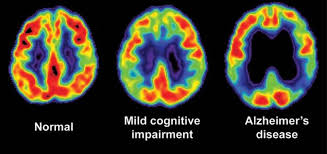
PET Scans: The Hearing–Dementia Connection
Brain PET scans showing metabolic activity decline from normal cognition (left) through mild cognitive impairment (center) to Alzheimer's disease (right). The Lancet Commission on Dementia (2020) identified hearing loss as the #1 modifiable risk factor for dementia - responsible for more attributable cases than any other factor, including smoking, hypertension, and physical inactivity.
Dementia & Cognitive Decline
5× higher risk of dementia
A landmark Johns Hopkins study of 639 adults tracked over 12 years found that individuals with mild hearing loss had nearly twice the risk of developing dementia. Those with severe hearing loss had five times the risk. A 2020 Lancet Commission identified hearing loss as the single largest modifiable risk factor for dementia - greater than smoking, hypertension, or depression.
Source: Lin et al., Archives of Neurology, 2011; The Lancet Commission on Dementia, 2020
Cardiovascular Disease
54% increased risk
The cochlea is highly sensitive to blood flow. Research published in The American Journal of Audiology found that cardiovascular disease is significantly associated with hearing loss. A study of 5,107 adults showed that impaired cardiovascular health correlated with elevated hearing thresholds across all frequencies. Workers with noise exposure face compounded cardiovascular stress.
Source: Friedland et al., American Journal of Audiology, 2009; WHO Bulletin, 2021
Depression & Social Isolation
2.4× higher risk of depression
A National Health Interview Survey analysis of 18,000+ adults found that those with hearing difficulty were 2.4× more likely to report depression. In workplace settings, this translates to disengagement, presenteeism, and increased use of mental health benefits. NIOSH data links hearing-impaired workers to 32% higher rates of healthcare utilization.
Source: NHIS/CDC, 2014; NIOSH Health Hazard Evaluations
Fall Risk & Workplace Injuries
3× higher fall risk
Johns Hopkins researchers found that even mild hearing loss (25 dB) tripled the risk of falls. In industrial environments, this means more lost-time incidents, higher insurance premiums, and increased OSHA recordable rates. The vestibular system shares anatomy with the cochlea - damage from noise exposure affects both hearing and balance.
Source: Lin & Ferrucci, Archives of Internal Medicine, 2012
The Employer Bottom Line
Every one of these conditions drives higher healthcare utilization, increased absenteeism, disability claims, and early retirement. For employers, untreated hearing loss isn't just a health risk - it's a compounding financial liability that grows with every year of inaction.
Why It Persists
Most Hearing Conservation Programs Were Designed to Check Boxes
The tools haven't fundamentally changed since OSHA's hearing conservation standard was published in 1983. The regulation set a floor - and most programs never looked up from it.
The Problem
Testing once a year means an entire year of potential damage goes undetected between checks. A worker's hearing can shift significantly in months - and you won't know until the next van visit.
A Better Approach
Continuous availability. Test during onboarding, after exposure events, and on any schedule that makes sense for your workforce.
The Path Forward
From Reactive to Proactive
Effective hearing conservation isn't about catching problems - it's about preventing them. Every stage should be connected, continuous, and backed by real data.
Reduce exposure at the source. Quieter equipment, smarter scheduling, and hearing protection that actually fits.
Catch hearing changes before they become permanent. Frequent testing identifies shifts when intervention can still make a difference.
When a change is detected, act immediately. Refit hearing protection, investigate noise sources, adjust exposure, and refer for clinical evaluation.
Every test, every measurement, every action - documented, retained, and audit-ready. Evidence that your program is protective, not just procedural.
Prevention Works. When You Have the Right Tools.
Soundtrace was built to close the gap between what hearing conservation programs are required to do and what they're capable of doing. Connected hearing tests, continuous monitoring, real-world fit testing, and digital recordkeeping - all in one platform.