
Noise Monitoring
A Repeatable Noise Program. Not a One-Day Survey.
OSHA's intent is a repeatable noise monitoring program - whether that means continuous dosimetry, scheduled spot surveys, or a structured cadence in between. A single one-day survey on a handful of workers every few years is what we're arguing against. The data this program produces is what makes the rest of your hearing conservation program defensible.
24/7
continuous mode option
Auto-Alert
threshold exceeded
Independent 1910.95 Audit
Third-Party Reviewed

FDA Registered
Class II Medical Device
SOC 2 Type II
AICPA Certified

HIPAA Compliant
Powered by Vanta

Made in USA
Engineered & Built
What It Does
Soundtrace's noise monitoring module centralizes dosimetry and area monitoring records for every employee and worksite. Exposure data is automatically compared against OSHA's 85 dBA action level and 90 dBA PEL, with flags triggered when thresholds are exceeded — so your industrial hygiene team knows exactly where to focus and your program documentation is always complete.
Calibrated Dosimeters.
Always Connected.
Personal and area noise dosimeters with Class II calibrated microphones. Deploy them across your facility for whichever cadence fits your program - continuous monitoring or scheduled spot surveys - and data flows automatically to your compliance platform with no manual downloads.
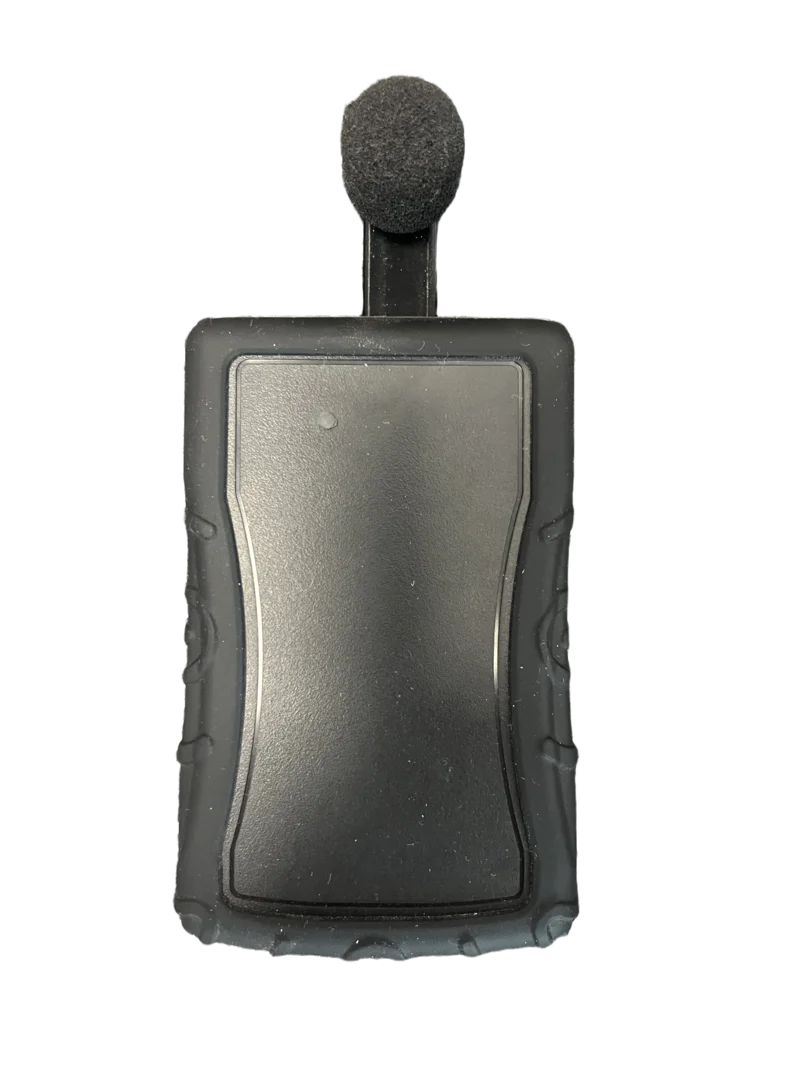
Noise Dosimeter
Personal & area monitoring with Class II calibrated microphone
Personal Dosimetry
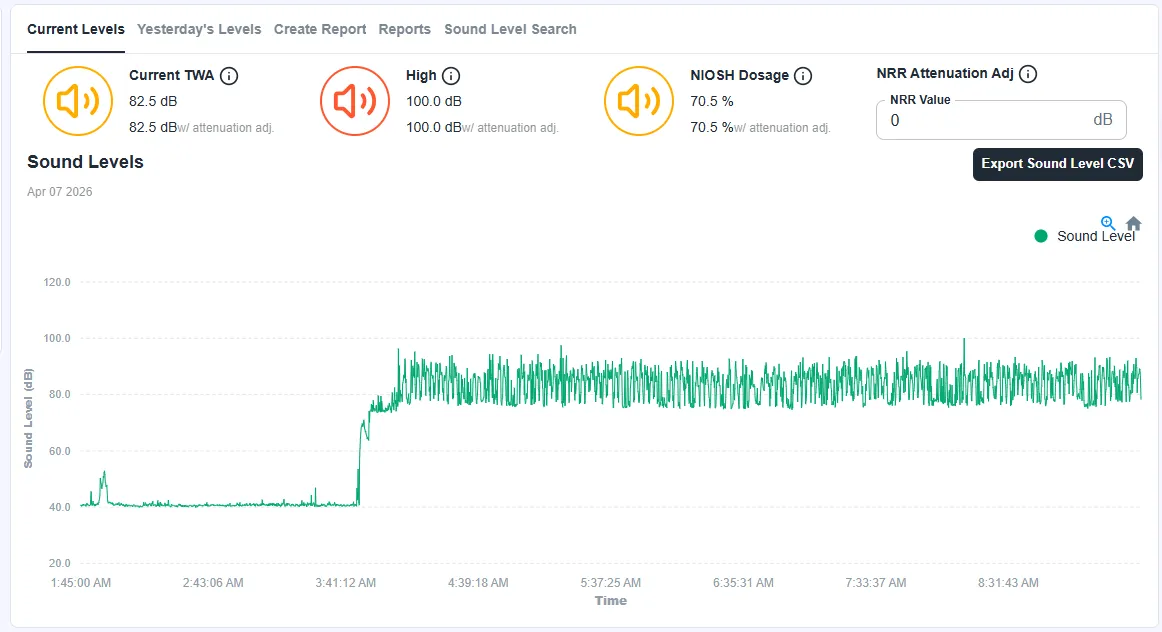
Clip-on dosimeters track individual worker exposure during the survey - whether that's a full shift in continuous mode or a scheduled spot survey. TWA, dose percentage, and peak levels are calculated and logged automatically.
Area Monitoring
Stationary monitors placed in key zones measure ambient noise levels on whatever cadence your program calls for - continuous, daily, weekly, monthly, or quarterly. Map noise profiles across your facility and track changes over time.
LTE & USB Connectivity
Data transmits automatically via built-in LTE cellular or syncs via USB. No WiFi infrastructure required. No manual data downloads. Readings flow directly to your cloud dashboard.
Continuous Mode Preview
Facility Noise Map - Continuous Mode
When you choose continuous monitoring, you see every zone live. When you choose scheduled spot surveys, the same dashboard shows your latest survey data on a repeatable cadence.
Press Room
Current noise level
PEL Exceeded
Why It Matters
A One-Day Survey Is Not a Noise Program
Most companies run a one-day noise survey on a handful of workers every few years and make the decision whether or not a program is needed. That checks one box - but it isn't the repeatable program OSHA's intent calls for, and it isn't long-term protection for your workers or your company. A repeatable program (continuous, monthly, quarterly - whatever fits the workplace) captures the variability a single survey can't.
Noise Changes Daily - Your Program Should Repeat
A one-day survey captures a snapshot. But noise levels vary by shift, by season, by equipment condition, by production schedule. Workers at 78 dBA today might be at 87 dBA tomorrow when a different line runs. A repeatable monitoring program - whether continuous dosimetry, monthly spot surveys, or quarterly walkarounds - captures that variability. A single survey every few years can't, and that's the gap OSHA's intent is closing.
The 75–85 dBA Danger Zone
Workers between 75 and 85 dBA are the ones most at risk of falling through the cracks. Below the OSHA action level, so they're scoped out of your hearing conservation program - but noise is still hazardous, still causing hearing damage over time, and you have zero record of their exposure. One-day surveys routinely miss these workers. A repeatable program - even at a quarterly cadence - catches them.
Data That Powers the Rest of Your HCP
Noise monitoring isn't the end goal - it's the data layer that makes your hearing conservation program defensible. For employees officially in the OSHA HCP, repeatable noise data informs enrollment decisions, audiogram interpretation, STS follow-up, controls, and PPE selection. For employees who aren't formally enrolled but still receive annual audiograms for long-term prevention, noise data provides the exposure context that makes those audiograms meaningful over time.
Hardware That Just Works
Cellular, WiFi, and Bluetooth-connected monitoring devices that stream data directly to your dashboard. No manual downloads. No USB cables. No data entry. Deploy sensors across your facility and data flows automatically to your compliance platform with full calibration tracking.
How It Works
From Deployment to a Defensible Program
Connected devices, a cadence that fits your workplace (continuous or scheduled), threshold alerts, and instant reporting. No clipboards required.
Deploy Devices
One-time setup
Place area monitors & dosimeters - connect via LTE, WiFi, or Bluetooth
Place area monitors in key zones and issue personal dosimeters to representative employees. Devices connect via LTE, WiFi, or Bluetooth - no infrastructure changes needed.Repeatable Measurement
Your chosen cadence
Continuous or scheduled spot surveys - TWA & dose calculated automatically
Pick the cadence that fits the workplace: continuous monitoring throughout shifts, or scheduled spot surveys daily, weekly, monthly, or quarterly. Either way, devices measure and transmit noise levels and the platform calculates TWA and dose automatically - no manual math.Threshold Alerts
Per survey
Notifications when action level, PEL, or custom thresholds are exceeded
When measured noise exceeds configurable thresholds (action level, PEL, or custom), alerts go out to supervisors, safety managers, and affected employees - on every survey, whether continuous or scheduled.Compliance Reports
On demand
One-click OSHA reports - exposure, calibration, and methodology documented
Generate OSHA-compliant noise monitoring reports with one click. Employee exposure determinations, area surveys, calibration records, and monitoring methodology - all documented automatically.The Hidden Risk
The 75–85 dBA Danger Zone
Workers in this range are exposed to noise that causes real hearing damage - but they fall below OSHA's 85 dBA action level, so they're scoped out of your hearing conservation program entirely. No audiograms. No monitoring. No protection. No record. Cross-check your program's coverage against the full OSHA 1910.95 annual checklist to spot gaps before an inspector does.
Hidden Danger Zone - Workers at Risk With No Record
These employees are exposed to hazardous noise daily, but because they fall below the 85 dBA action level, OSHA doesn't require monitoring. That means no audiograms, no hearing protection, and no exposure documentation. If one of these workers develops hearing loss, you have zero data to show their history. A repeatable monitoring program - continuous or on a scheduled cadence - is what catches them.
Sound Level
80 dBA
Busy Production Line
Risk Level
Hidden danger
What This Means
Still below 85 dBA action level - no OSHA mandate, but real hearing damage accumulating. No audiograms, no monitoring, no documentation.
OSHA Requirements
Noise Monitoring Compliance Checklist
Every noise monitoring record OSHA requires under 29 CFR 1910.95(d) - automatically captured by Soundtrace.
Soundtrace automatically handles all 7 monitoring requirements
Repeatable program - zero manual logging
Common Questions
Noise Monitoring FAQ
Everything you need to know about OSHA noise monitoring requirements, TWA calculations, and connected monitoring hardware.
Showing 11 results
When is noise monitoring required under OSHA?
What's the difference between the action level and the PEL?
How often do we need to re-monitor?
What is TWA and how is it calculated?
What's the difference between OSHA and NIOSH noise exposure criteria?
Do we need area monitoring, personal dosimetry, or both?
What monitoring devices does Soundtrace support?
How accurate are the noise measurements?
Can we set custom alert thresholds?
How does noise data integrate with audiometric testing?
What happens to the data if we lose connectivity?
The Bigger Picture
This Isn't Just About Passing an Audit
A repeatable noise monitoring program - continuous or on a scheduled cadence - builds the long-term exposure record that supports the rest of your hearing conservation program. It informs HCP enrollment, gives context to annual audiograms (including preventative ones for workers not formally enrolled), and protects your company from claims you can't defend against because the data doesn't exist.
For Your Employees
Workers in the 75–85 dBA range are accumulating exposure with zero documentation. If they develop hearing loss in 10 years, there's no record connecting it to their work environment. A repeatable monitoring program builds the longitudinal data set that supports early intervention - and gives context to the annual audiograms many of these workers receive for long-term prevention even when OSHA doesn't formally enroll them in the HCP.
For Your Company
When a hearing loss claim comes in, the first question is: "What was this worker's exposure history?" If you relied on a one-day survey from three years ago, that's your answer - and it's not a defensible one. A repeatable program (continuous, or even structured spot surveys a few times a year) gives you a documented exposure record by worker, by zone, by shift, across years. That's the difference between a successful defense and an expensive settlement.
Related Resources
Continue exploring the Soundtrace platform
Audiometric Testing
Pair noise data with annual hearing tests for a complete hearing conservation program.
Learn moreHPD Fit Testing
Verify that hearing protection actually works in your noise environment.
Learn moreRecordkeeping
Automated compliance records for noise surveys, dosimetry, and exposure history.
Learn moreCase Studies
See how organizations built defensible noise programs with Soundtrace.
Learn moreIndustry Solutions
Portable noise monitoring for field crews, construction, and mining operations.
Learn moreBlog
Noise exposure research, dosimetry best practices, and OSHA compliance guides.
Learn moreReady to Build a Real Noise Program?
See how a repeatable noise monitoring program - continuous, scheduled spot surveys, or a mix - replaces the one-day-every-few-years survey with the exposure record that supports the rest of your hearing conservation program.