
Audiometric testing · equipment
Soundtrace Audiometer Specifications: Offline, Group and Ambient-Noise Capabilities
The Soundtrace Audiometer is an FDA-listed automated Type 4 audiometer for occupational hearing-conservation programs. It works online or offline, supports four routine and up to eight simultaneous testing stations, and documents ambient conditions with every test.
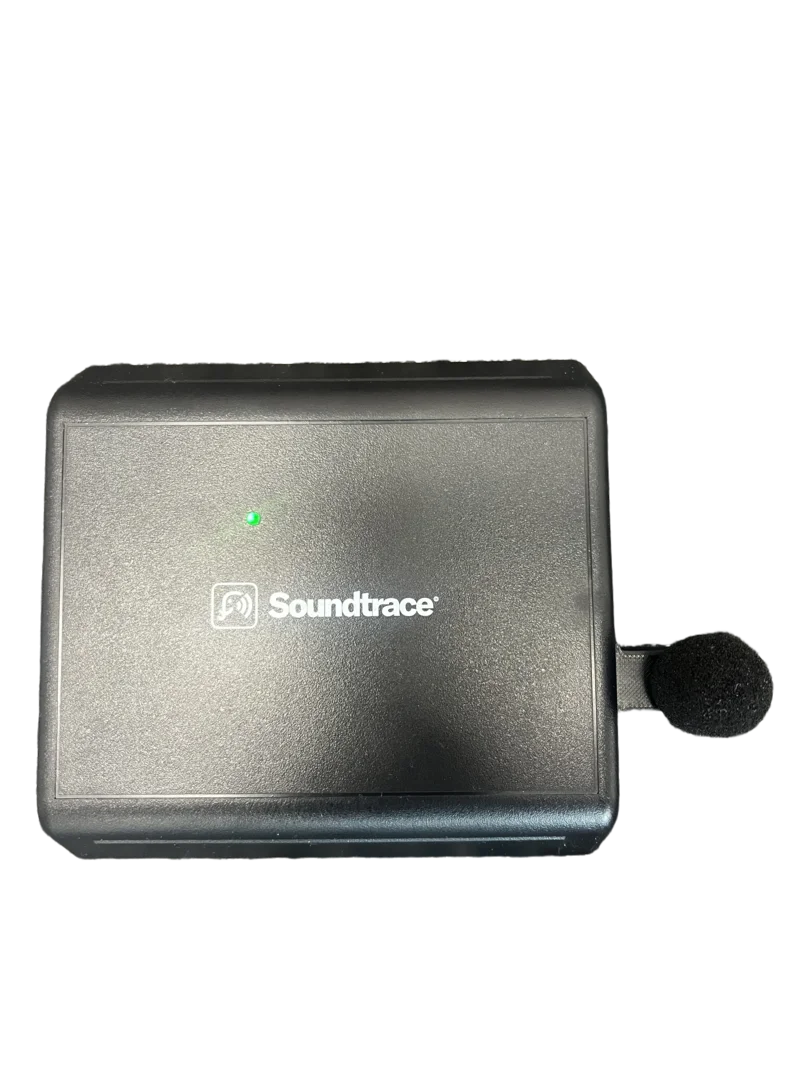
4 / 8 seats
routine / maximum
Class 2 ambient
continuous measurement
Independent 1910.95 Audit
Third-Party Reviewed

FDA Registered
Class II Medical Device
SOC 2 Type II
AICPA Certified

HIPAA Compliant
Powered by Vanta

Made in USA
Engineered & Built
Soundtrace Audiometer at a glance
The details behind the testing experience.
Designed to be clear for EHS leaders, and specific enough for clinical, procurement, and IT reviews.
Verify Soundtrace in the FDA Registration & Listing Database.
Invisible Booth™ ambient intelligence
A test that knows when to wait.
The Soundtrace Audiometer continuously observes the room while testing is in progress. One established ambient-noise cap keeps operation simple: the test pauses when the cap is exceeded and resumes when conditions improve. For documentation, ambient noise can be reviewed alongside each recorded hearing threshold.
Measure
Calibrated Class 2 ambient system.
Pause
Automatic pause and resume behavior.
Document
Noise and testing events retained.
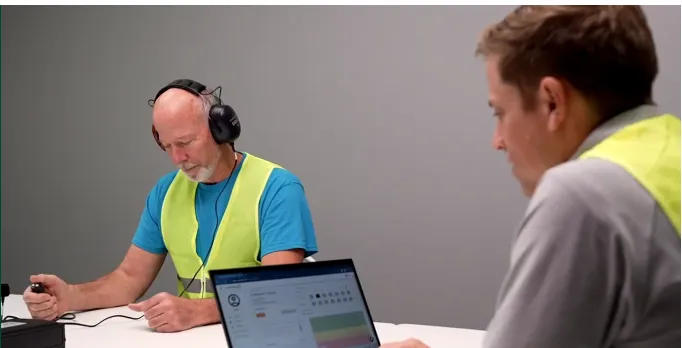
Operationally ready
Built for the day your crew actually has.
- Dedicated response control keeps the test interaction simple.
- Bluetooth and USB support flexible, field-ready setups.
- HIPAA and SOC 2 Type II workflows carry the record beyond the test.
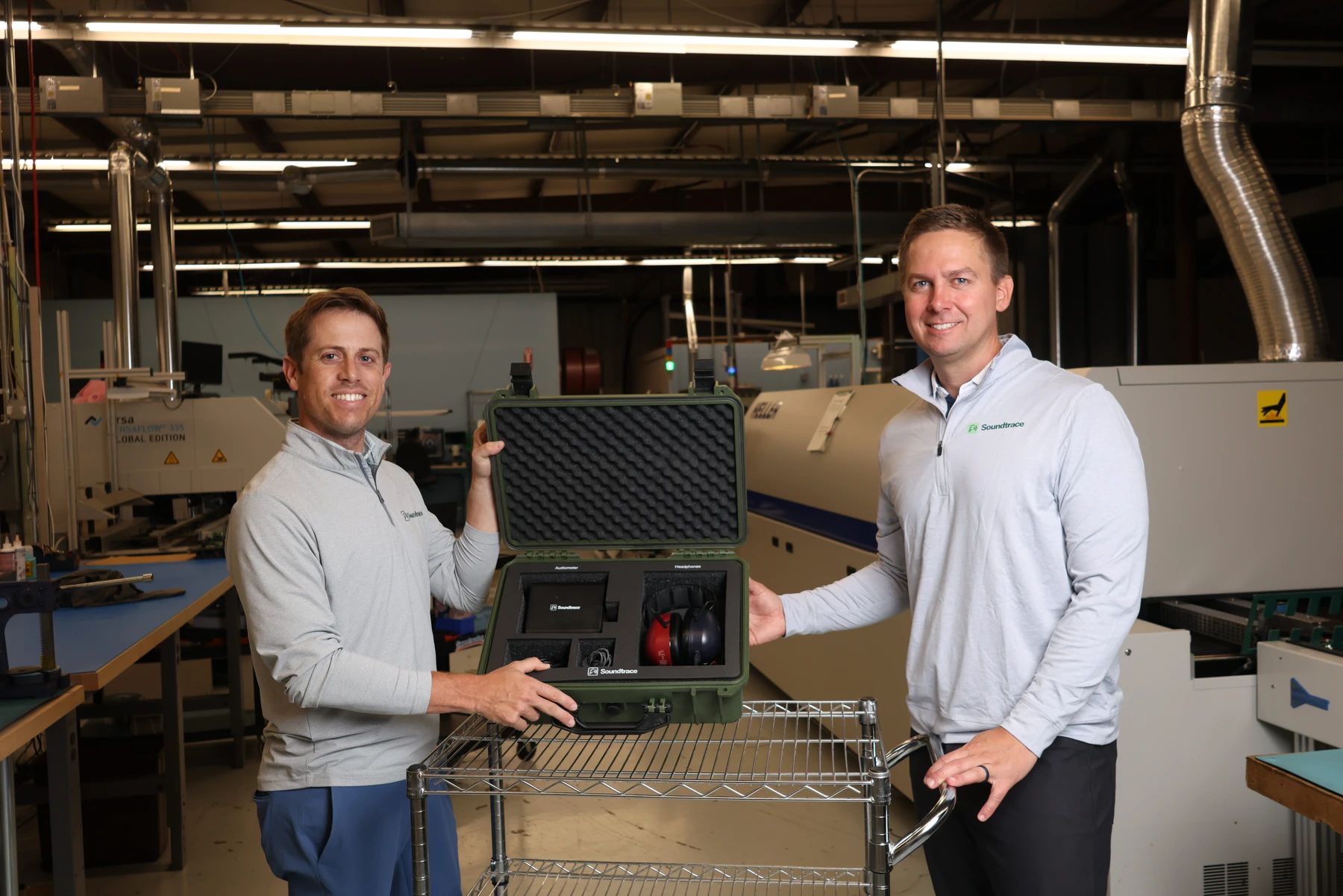
Built in Middletown, Ohio.
The full Soundtrace audiometric kit is manufactured and prepared at our Middletown facility. Our team manages hardware assembly, quality checks, and deployment readiness before each system reaches a customer site.
Middletown, Ohio
U.S. manufacturing facility
Complete kit readiness
Prepared and checked before shipment
Annual calibration
Calibrated before deployment. Replaced before expiration.
Soundtrace manages calibration from start to finish. Each Soundtrace Audiometer and its paired RadioEar DD65v2 headset receives a full electroacoustic calibration before deployment and annually thereafter under ANSI/ASA S3.6. This annual cadence exceeds OSHA’s minimum requirement for exhaustive calibration every two years.
What is verified
Frequency accuracy, hearing-level output, linearity, harmonic distortion, crosstalk, and on/off performance for both channels from 500 through 8000 Hz.
How it is documented
Testing uses traceable Larson Davis equipment and an acoustic ear coupler. The integrated Class 2 ambient system is calibrated and documented separately.
How downtime is avoided
Approximately two weeks before expiration, Soundtrace sends a freshly calibrated replacement so testing can continue without interruption.
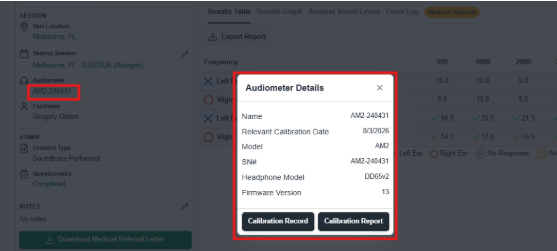
Calibration status stays attached to the device.
Teams can see the relevant calibration date and open the calibration record or report directly from the audiometer details in Soundtrace.
No-downtime exchange
The replacement arrives before the current calibration expires.
1. Freshly calibrated equipment ships
Soundtrace sends a replacement audiometer and paired headset approximately two weeks before expiration.
2. Your team makes a simple swap
Put the fresh unit into service and continue testing—no calibration appointment or program interruption.
3. The expiring equipment returns
Return the previous unit after the replacement is operating. Your site is never left without an audiometer.
Continuous testing availability
The overlap between delivery and expiration keeps annual calibration from becoming a scheduling disruption.
Calibration and quality-assurance work is performed at Soundtrace’s Cincinnati office. Device-history records are maintained within Soundtrace’s FDA-regulated quality management system under 21 CFR Part 820 (QMSR) and are available upon request.
Evidence supporting Soundtrace audiometry
Performance claims with the evidence beside them.
Field agreement, implementation speed, and compliance architecture are documented separately so technical reviewers can examine the basis for each claim.
9,496
Real-world matched comparisons
91.4% were within ±10 dB, with an average paired difference of −2.68 dB across the untrimmed primary population. This measures real-world agreement, not controlled clinical accuracy.
Review the field study~6 min
Purdue implementation result
Purdue University’s program reduced average testing time from roughly 30 minutes to approximately six minutes after adopting Soundtrace’s testing and workflow model.
Read the Purdue evidence29 CFR 1910.95
Independent program review
Soundtrace’s hearing-conservation program architecture has been independently evaluated against OSHA’s occupational-noise requirements.
See why teams trust SoundtraceBeyond the test
The accurate audiogram is the starting point.
After synchronization, each audiogram becomes part of the employee’s longitudinal Soundtrace record. The platform compares it with the appropriate baseline, identifies possible threshold shifts, routes the result for professional review, and generates required documentation.
The result stays connected to exposure, hearing-protection, notification, and follow-up workflows—so the equipment and the hearing-conservation program share one record.
Explore hearing-conservation recordkeepingFrequently asked questions
Practical questions, documented answers.
Technical, operational, calibration, and program questions about Soundtrace audiometry.
The Soundtrace Audiometer is an FDA-listed, automated Type 4 pure-tone audiometer designed for occupational hearing-conservation programs. It supports online and offline testing, group testing, real-time Class 2 ambient-noise measurement, automated threshold identification, and REAT hearing-protection fit testing.
See the Soundtrace Audiometer in your program.
Bring your room, shift, and workforce questions. We’ll walk through the equipment and workflow together.