
Compliance Recordkeeping
Hearing Conservation Software That Keeps Your Records Audit-Ready
Replace filing cabinets and frantic audit prep with 30+ years of digital retention, instant report generation, and a system that's always ready when OSHA shows up.
Audiogram - Sarah Chen
Mar 15, 2026
Fit Test - James Wilson
Mar 14, 2026
Noise Survey - Zone A
Mar 14, 2026
STS Alert - Michael Brown
Mar 12, 2026
Training Cert - All - Plant 3
Mar 10, 2026
60 sec
audit report gen
AES-256
encrypted at rest
Independent 1910.95 Audit
Third-Party Reviewed

FDA Registered
Class II Medical Device
SOC 2 Type II
AICPA Certified

HIPAA Compliant
Powered by Vanta

Made in USA
Engineered & Built
Why It Matters
Recordkeeping That Works As Hard As You Do
Most hearing conservation programs fall apart at recordkeeping - paper gets lost, spreadsheets diverge, and when OSHA shows up, you're scrambling. Beyond compliance, poor records expose you to workers' comp claims, insurance cost escalation, and long-term civil liability.
Instant OSHA Audit Readiness
When an OSHA inspector shows up, every second counts. Soundtrace puts your complete compliance records at your fingertips - audiometric history, noise monitoring data, training records, hearing change notifications, and 300 Log documentation - all searchable and exportable in seconds.
30-Year Record Retention
Workers' comp claims for noise-induced hearing loss can surface decades after exposure. Soundtrace automatically retains every audiogram, baseline, and hearing change record for 30+ years in encrypted cloud storage - without anyone manually managing a thing.
Eliminate Paper & Spreadsheet Chaos
Paper audiograms get lost. Spreadsheets have version control nightmares. PDF scans aren't searchable. Soundtrace digitizes everything from the moment of capture - every audiogram is automatically stored, indexed by employee, and linked to their complete hearing conservation history.
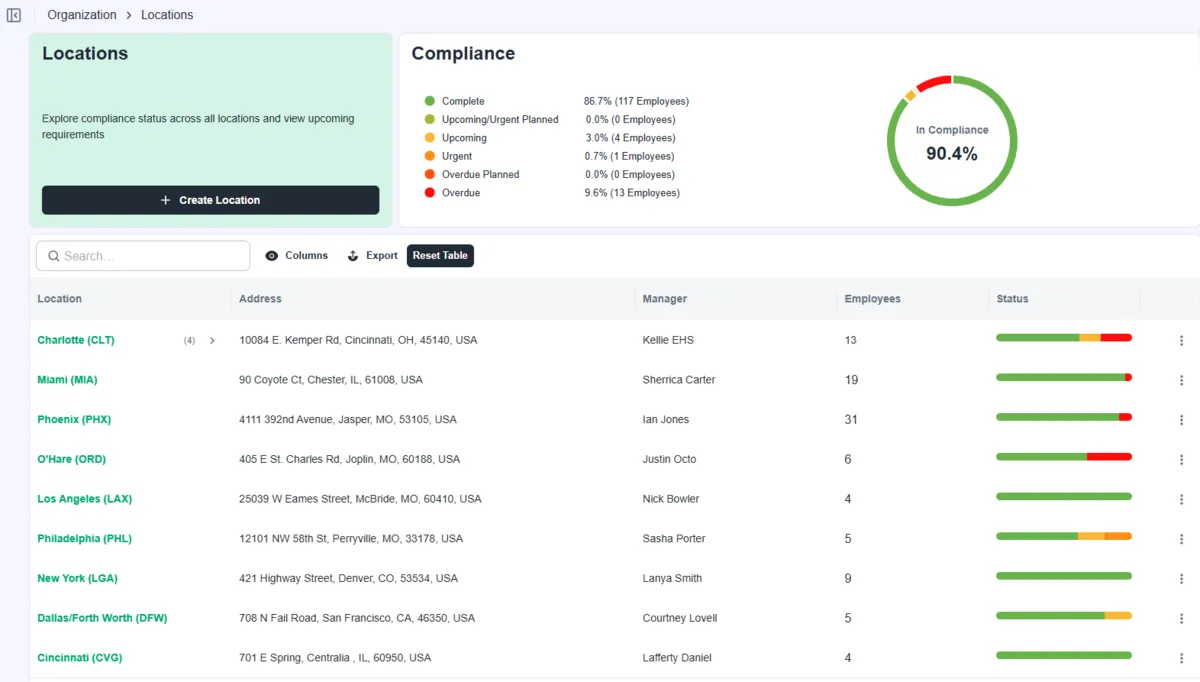
Multi-Site Centralized Dashboard
Managing recordkeeping across 5, 50, or 500 locations from a single dashboard. Compare compliance rates across sites, identify gaps before they become violations, and standardize your program nationwide. Integrate with 40+ HRIS systems via API or SFTP to automate roster management - employees are added, updated, and offboarded automatically.
How It Works
From Test to Audit-Ready in Seconds
No manual entry. No paper trail. Every record is captured, secured, analyzed, and export-ready the moment it's created.
Automatic Capture
Instant
Every test digitally captured - no manual entry, no paper, no errors
Every audiometric test, fit test, and noise measurement is digitally captured the moment it happens. No manual data entry, no paper forms, no transcription errors.Encrypted Storage
Always on
HIPAA-compliant, SOC 2 certified cloud with versioned backups
Records are immediately encrypted and stored in HIPAA-compliant, SOC 2 Type II certified cloud infrastructure.Change Alerts
Real-time
Automatic STS detection, age correction, and 300 Log determination
The platform automatically detects meaningful hearing changes, applies age adjustments, and determines whether they need to be recorded on your OSHA injury log.Audit-Ready Export
On demand
One-click OSHA reports with full data provenance and chain of custody
Generate OSHA-compliant reports with one click. Export individual employee histories or site-wide compliance summaries.Platform Details
How Soundtrace Keeps Your Hearing Conservation Records Audit-Ready
Centralized Employee Records
Every audiogram, STS flag, HPD assignment, training completion, and noise exposure record is tied to the individual employee — searchable, exportable, and stored for the OSHA-required retention period automatically.
Automatic STS Detection and Notification
Soundtrace compares each new audiogram against the employee’s baseline, applies age correction per Appendix F, and flags standard threshold shifts automatically — with the required 21-day notification clock built in.
OSHA 300 Log Support
When a work-related STS may require an OSHA 300 log entry, Soundtrace flags the case and provides the underlying audiogram documentation your team needs to make the recordability determination — so nothing falls through the cracks.
Multi-Site Visibility
For EHS teams managing hearing conservation across multiple facilities, Soundtrace provides a unified dashboard showing program status by site — which locations have overdue audiograms, which employees have unresolved STS flags, and where HPD compliance is lagging.
OSHA Requirements
Your Compliance Checklist
Every record OSHA requires under 29 CFR 1910.95 - automatically captured and maintained by Soundtrace.
Soundtrace automatically handles all 8 recordkeeping requirements
Zero manual data entry required
Top Concerns
Questions We Hear From Every EHS Team
Switching recordkeeping systems is a big decision. Here are the concerns that come up most - and honest answers.
How secure is our audiometric data?
Soundtrace is SOC 2 Type II certified and HIPAA compliant. All data is encrypted at rest and in transit using AES-256 encryption. We maintain strict access controls with role-based permissions, complete audit trails, and regular third-party security assessments through our partnership with Vanta.
We have years of paper records. Can we migrate?
Absolutely. We handle the entire migration process - importing historical audiograms, baseline records, and employee data from paper files, PDFs, spreadsheets, or your previous provider's system. Your complete history carries over so there's no gap in your compliance documentation.
Does it integrate with our existing EHS and HR systems?
Soundtrace is designed to work alongside your existing safety management and HR systems. We integrate with 40+ HRIS platforms via API or SFTP to automate roster management - employees are added, updated, and offboarded in real time without manual data entry. We also provide data export capabilities compatible with major EHS platforms like SAP EHS, Cority, and Intelex, and our API supports custom integrations for enterprise clients.
Common Questions
Recordkeeping FAQ
Detailed answers about OSHA recordkeeping requirements, data security, and the Soundtrace platform.
Showing 12 results
What specific records does OSHA require for hearing conservation?
How does Soundtrace handle OSHA 300 Log recordability determinations?
How long are we legally required to keep audiometric records?
What noise monitoring records do we need to maintain?
Do we need to keep records of hearing protection fit testing?
Is Soundtrace HIPAA compliant?
What happens to our data if we ever leave Soundtrace?
Who at our company can access audiometric records?
How do you import our existing paper or PDF audiograms?
We use a mobile van provider - can we switch mid-year?
Can we track compliance rates across multiple sites in real time?
Does Soundtrace generate the reports we need for OSHA inspections?
Related Resources
Continue exploring the Soundtrace platform
Audiometric Testing
Every audiogram automatically stored, versioned, and ready for audit.
Learn moreNoise Monitoring
Continuous exposure records by worker, zone, and shift — not just annual snapshots.
Learn moreHPD Fit Testing
Fit test records with PAR scores tied to each employee's hearing profile.
Learn moreCase Studies
See how organizations eliminated paper records and passed audits with Soundtrace.
Learn moreIndustry Solutions
Multi-facility recordkeeping for food production, heavy equipment, and metals.
Learn moreBlog
OSHA 300 Log requirements, retention rules, and digital recordkeeping guides.
Learn moreReady to Simplify Your Recordkeeping?
See how Soundtrace's hearing conservation software can replace your filing cabinets, spreadsheets, and audit stress with a single compliance platform.